Survey: The Future of Humanitarian Logistics
Artificial Intelligence identified as key driver for supply chain management in the humanitarian sector in the future. Fritz Institute and Wageningen University & Research presented findings at ConnectChains – The Humanitarian Supply Chain Conference in Berlin.
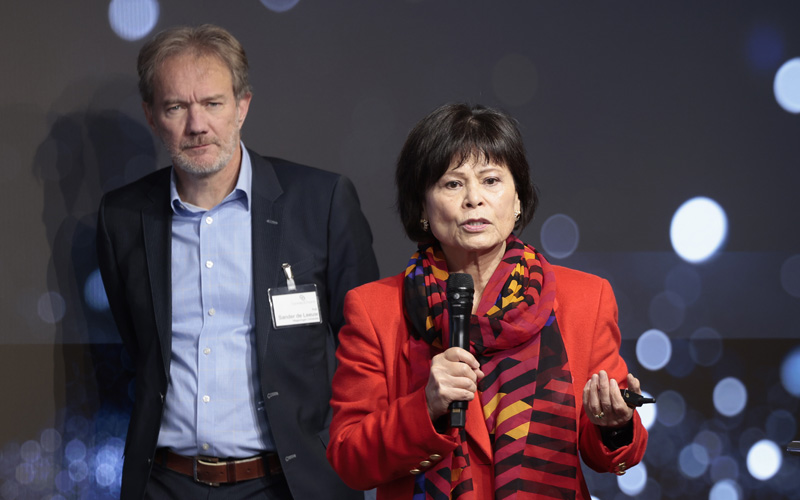
Artificial Intelligence (AI) has the potential to significantly enhance humanitarian logistics. That is the result of a new study titled “The Future of Humanitarian Logistics”, conducted by the Fritz Institute (California) and Wageningen University & Research (The Netherlands) in cooperation with the Logistics Hall of Fame. The study’s results were unveiled on December 4 at ConnectChains – The Humanitarian Supply Chain Conference, held at the Bertelsmann Repraesentanz in Berlin.
Surveying 75 supply chain experts from humanitarian organizations and the commercial sector, the study concludes that cross-sector collaboration on AI-driven supply chain solutions would deliver the greatest benefits to humanitarian operations.
“The experts surveyed agreed that pooling expertise from different sectors can accelerate innovation in practice, reduce duplication of work, and strengthen global aid logistics projects,” said study author Prof. Dr. Sander de Leeuw of Wageningen University & Research.
The respondents identified four priority areas where AI-enabled cooperation could drive the most impact:
• Demand forecasting in crisis situations: Predicting rapidly evolving needs for food, shelter, medical supplies, and logistics capacity.
• Optimization of route planning and distribution: Increasing efficiency in transport networks, last-mile delivery, and resource allocation.
• Real-time transparency and data exchange: Developing interoperable systems to improve coordination among humanitarian actors and authorities.
• AI-supported preparedness and scenario planning: Using data-driven models for risk assessment, crisis simulation, and emergency preparedness.
Based on these findings, the study partners plan to form an international, cross-sector project group. “The international team will develop practical solutions and strategic partnerships,” said Mitsuko Mizushima of the Fritz Institute.
Conference director Thilo Jörgl emphasized the timeliness of this initiative: “The humanitarian system is undergoing profound change. Recent financial cuts by the US government – particularly those affecting USAID programs – have created considerable uncertainty. Many describe this shift as a ‘humanitarian reset’ that could eclipse the scale of UN reforms in the past two decades.”
The third edition of ConnectChains – The Humanitarian Supply Chain Conference attracted nearly 100 international logistics and supply chain experts, including representatives from humanitarian organizations such as the International Committee of the Red Cross, Johanniter, Malteser, Oxfam GB, UNHCR, and Welthungerhilfe, as well as commercial leaders from Chapman Freeborn, DHL, duisport, Loxxess, and Siemens.
Further information can be found at https://www.logisticshalloffame.net/en/events/connectchains-conference-2025