Logistics Hall of Fame to Induct Nine New Members
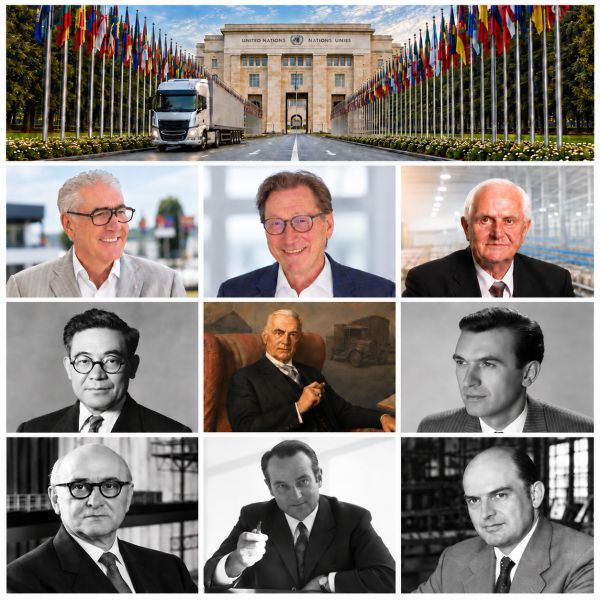
The Logistics Hall of Fame is inducting multiple new members in a single year for the first time in ten years. Nine individuals are being honored for achievements that have had a lasting impact on manufacturing, transportation, warehousing technology and logistics management. In addition, the international jury is honoring the United Nations Economic Commission for Europe (UNECE) for the CMR Convention, which was developed under its auspices.
- Johannes Hödlmayr and Jürgen Weber are inducted as new members.
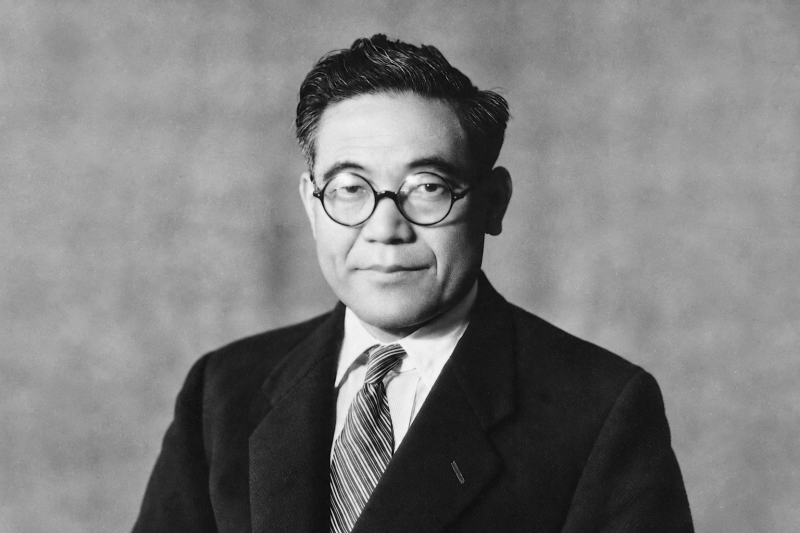
- Günter Knapp, Oskar Schunck and Kiichirō Toyoda receive the honor posthumously.
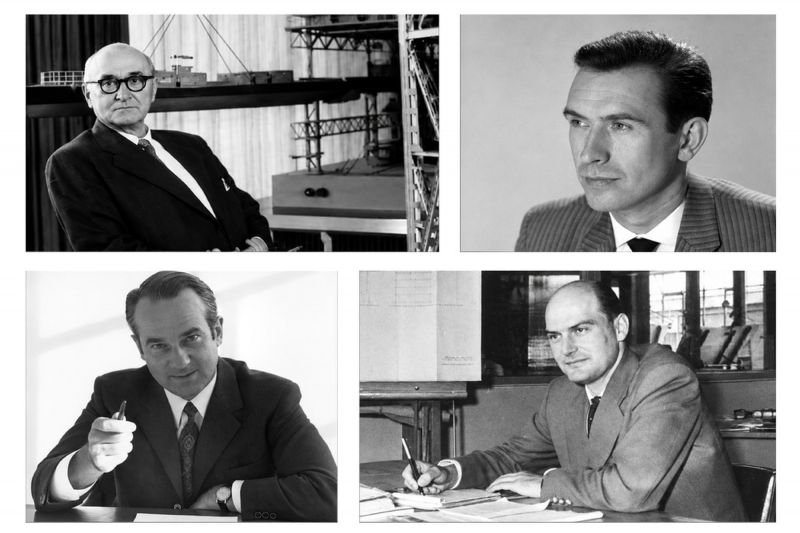
- Kurt Baumann, Heinz Hasselmann, Reinhard Mohn and Hans Reuter are honored as pioneers of the automated high-bay warehouse.
- The UNECE receives an award for the CMR Convention.
- Official induction ceremony to take place during the Hall of Fame’s annual gala on December 4 at the Hofburg Palace in Vienna.


|

|

|
|

|
|

|
|

|

Ismaning, September 24, 2026. The Logistics Hall of Fame is inducting multiple new members in a single year for the first time in ten years. Nine individuals are being honored for achievements that have had a lasting impact on manufacturing, transportation, warehousing technology and logistics management. In addition, the international jury is honoring the United Nations Economic Commission for Europe (UNECE) for the CMR Convention, which was developed under its auspices.
“Logistics history is written in many different ways: through entrepreneurial courage, technological breakthroughs, pioneering academic work or reliable international rules. What they all have in common is that they were created by people whose pioneering achievements have had an impact far beyond their own time and companies – and continue to shape logistics today. Our new members represent achievements that have changed not only individual companies, but entire industries,” says Anita Würmser, Managing Chair of the Logistics Hall of Fame jury.
The award organization received 30 nominations from nine nations. The council initially nominated eleven individuals from these submissions. The final decision was made by the international jury in July. It comprises 70 experts from business, academia, politics and the media from 13 nations.
With their decision, the council and jury are honoring outstanding achievements from different eras and areas of logistics. Admission to the Hall of Fame is determined neither by the size of a company nor by an individual’s level of public recognition, but by demonstrable benefits to logistics extending beyond the boundaries of their own company.
CMR Convention under the auspices of UNECE
Few other sets of rules have had such a lasting impact on international road freight transportation as the CMR Convention. The “Convention on the Contract for the International Carriage of Goods by Road,” adopted in Geneva on May 19, 1956, under the auspices of the United Nations Economic Commission for Europe (UNECE), entered into force in 1961. It established a uniform legal framework for cross-border transportation for the first time, making it one of the key foundations of modern logistics. Historically, this was an important step toward the economic integration of Europe following World War II. Of particular importance were the introduction of a liability regime and the standardized CMR consignment note. To this day, it remains the most important accompanying document in international road freight transportation.
Kurt Baumann, Heinz Hasselmann, Reinhard Mohn and Hans Reuter: Pioneers of the Automated High-Bay Warehouse
In the 1950s, warehousing was still largely characterized by manual labor, forklifts and floor-level storage. When a 20-meter-high “book silo” was built in Gütersloh in the early 1960s, it marked the beginning of a new era in warehousing logistics and became the starting point for the worldwide development of modern high-bay warehouses. Floor space was replaced by vertical space, warehouse processes were automated, and material flows could be managed more systematically. For this pioneering achievement, the Logistics Hall of Fame is inducting Kurt Baumann, Heinz Hasselmann, Reinhard Mohn and Hans Reuter, who laid the foundation for modern automated warehousing technology with the Bertelsmann book silo. They were the first to demonstrate in practice the potential of combining warehouse technology, steel construction, conveyor technology and automation. It was a systems innovation driven by entrepreneurial courage and technological development.
Johannes Hödlmayr: Pioneer of European Vehicle Logistics and Founding Father of ECG
When Johannes Hödlmayr championed the idea of a European trade association for vehicle logistics providers in the late 1990s, the industry was still far from speaking with one voice. Logistics service providers, automakers and vehicle dealers worked together, but communication was shaped by national structures, differing standards and, in many cases, a lack of trust. As the founding father of ECG – Association of European Vehicle Logistics – the Austrian entrepreneur laid the foundation in 1997, despite considerable resistance, for dialogue between logistics service providers, OEMs and vehicle dealers. This helped pave the way for common standards, knowledge exchange and greater cooperation throughout the automotive supply chain.
Günter Knapp: Pioneer of Automated Pharmaceutical Logistics
Today, the reliable supply of pharmacies with medications is taken for granted as one of the fundamental tasks of logistics. Several times a day, pharmaceuticals leave wholesale distribution centers, are picked within a very short period of time and delivered to pharmacies. Behind this process lies a technology that fundamentally transformed pharmaceutical wholesaling. One of its key pioneers was Günter Knapp. The Austrian inventor and entrepreneur was responsible for an early and lasting technological leap in logistics: the automation of order picking in pharmaceutical wholesaling. With the development of the A-Frame picking machine, Günter Knapp created the foundation for fast, accurate and automated picking of medication packages, revolutionizing pharmaceutical logistics.
Oskar Schunck: Pioneer of Transportation Insurance
Transporting goods means assuming responsibility – and taking on risks. Today, it seems self-evident that transportation damage, liability issues and their financial consequences can be covered by insurance. A little more than a century ago, this was far from self-evident. One of the key pioneers of a new approach to risk management was Oskar Schunck (1877–1936). He recognized this gap early on and shaped the principle that “insurance replaces liability.” His approach was unique for its time and created such clear benefits for all sectors involved in transportation that industry associations, shippers and the freight forwarding community adopted the insurance model. Schunck’s particular significance for logistics lies in his key role in developing the General German Freight Forwarders’ Terms and Conditions (ADSp), which were initiated at roughly the same time, in combination with “automated” transportation liability insurance.
Kiichirō Toyoda: Pioneer of Just-in-Time and the Toyota Production System
Produce what is needed, exactly when it is needed, and only in the quantity required: in the world of early industrial mass production, this was a radical idea. It emerged not from abundance, but under conditions that could hardly have been more challenging: limited capital, scarce raw materials and a market dominated by foreign automakers. Kiichirō Toyoda, founder of Toyota Motor Co., Ltd., was the father of the Just-in-Time principle. It became a key foundation of the Toyota Production System and transformed manufacturing and logistics around the world. Many elements of the Toyota Production System later became known under the term “Lean Production.” Today, they shape not only the automotive industry, but also logistics, mechanical engineering, retail, healthcare and numerous other sectors. Kiichirō Toyoda founded more than an automaker. He provided the conceptual impetus for one of the most influential production and logistics systems in industrial history.
Jürgen Weber: Pioneer of Logistics Controlling
There was a time when logistics was indispensable to companies – yet at the same time remained a blind spot in business management. While other corporate functions had long been managed using performance indicators, logistics lacked a common language. This is where Prof. Emeritus Dr. Dr. h. c. Jürgen Weber (*1953) entered the scene in the 1980s, beginning to quantify this blind spot. Weber is one of the leading pioneers in logistics performance measurement and a globally recognized expert in logistics and supply chain controlling. He “constructed” the frameworks on which industrial logistics is measured, evaluated and managed around the world today. In doing so, he played a key role in establishing logistics as a strategic value-adding function within companies.
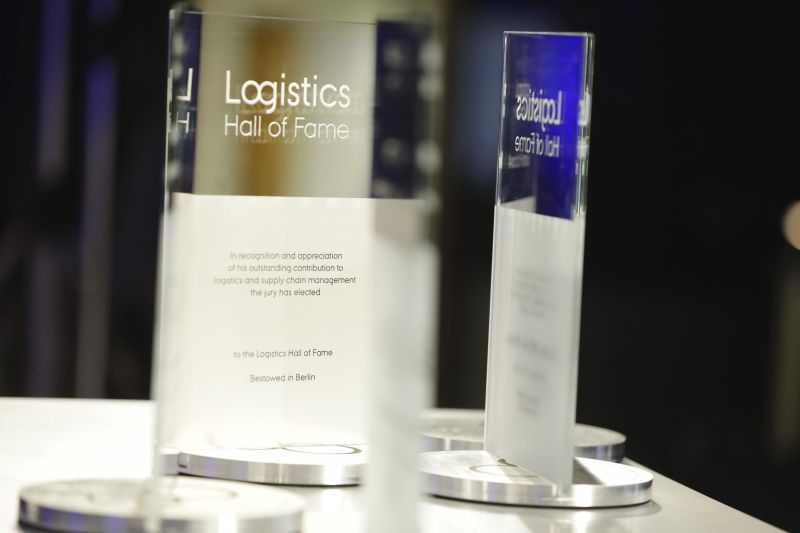
The new members will be officially inducted during the annual Logistics Hall of Fame gala on December 4 at the Hofburg Palace in Vienna. To date, 46 logistics professionals have been inducted into the Logistics Hall of Fame.
Background Logistics Hall of Fame: The Logistics Hall of Fame honors international personalities who have made an outstanding contribution to the further development of logistics and supply chain management. The goal of the Logistics Hall of Fame is to serve as a global platform for documenting the milestones of logistics and honoring its movers and shakers, thus underscoring the importance of logistics for business and society. The Logistics Hall of Fame also presents the Logistics Leader of the Year Award to current pacesetters in logistics. In addition, the Logistics Hall of Fame recognizes innovative logistics projects by humanitarian organizations with the Lynn C. Fritz Medal for Excellence in Humanitarian Logistics. The sponsor is the Fritz Institute. The non-profit initiative is supported by politics, associations, media, business and science. Steffen Bilger, Federal Minister for Transport, is the patron.
Circle of Supporters: 24/7 ASSISTANCE, ADAC Service GmbH, AEB, BLG LOGISTICS, Bundesverband für Eigenlogistik & Verlader (BWVL), Bundesverband Güterkraftverkehr Logistik und Entsorgung (BGL), Bundesverband Materialwirtschaft, Einkauf und Logistik (BME), Bundesverband Paket und Expresslogistik (BPEX), Bundesverband Spedition und Logistik (DSLV), Bundesvereinigung Logistik (BVL), Deutsches Verkehrsforum (DVF), Duisburger Hafen (duisport), EPAL, European Logistics Association (ELA), Exotec, Fritz Institute (Stifter), GARBE Industrial, Gebrüder Weiss, Häfen und Güterverkehr Köln (HGK), HERMES LOGISTIK.Forum, impact media projects, International Federation of Freight Forwarders Associations (FIATA), International Road Transport Union (IRU), Interroll, io, Lebensmittel Zeitung, LIP Invest, LTG - Landauer Transportgesellschaft Doll, materialfluss, Nagel-Group, NIMMSTA, Nomagic, Renault Trucks, Schnellecke Logistics, SCHÖNENBERGER Systeme, SCHUNCK GROUP, Seifert Logistics Group, Spedition Hamprecht, SSI Schäfer, STILL, TGW Logistics Group, TMG Consultants, trans aktuell, Verband der Automobilindustrie (VDA), Wenco, WILTSCHE Fördersysteme, Winner Spedition
Follow us on Social Media:
LinkedIn: www.linkedin.com/showcase/logistics-hall-of-fame
Reprint free of charge. Copy requested:
Logistics Hall of Fame, c/o impact media projects GmbH, Eckherstraße 10 b, 85737 Ismaning,
This email address is being protected from spambots. You need JavaScript enabled to view it., T +49(0) 89 2153846-13, www.logisticshalloffame.net